
What I found
Old wiring left in place
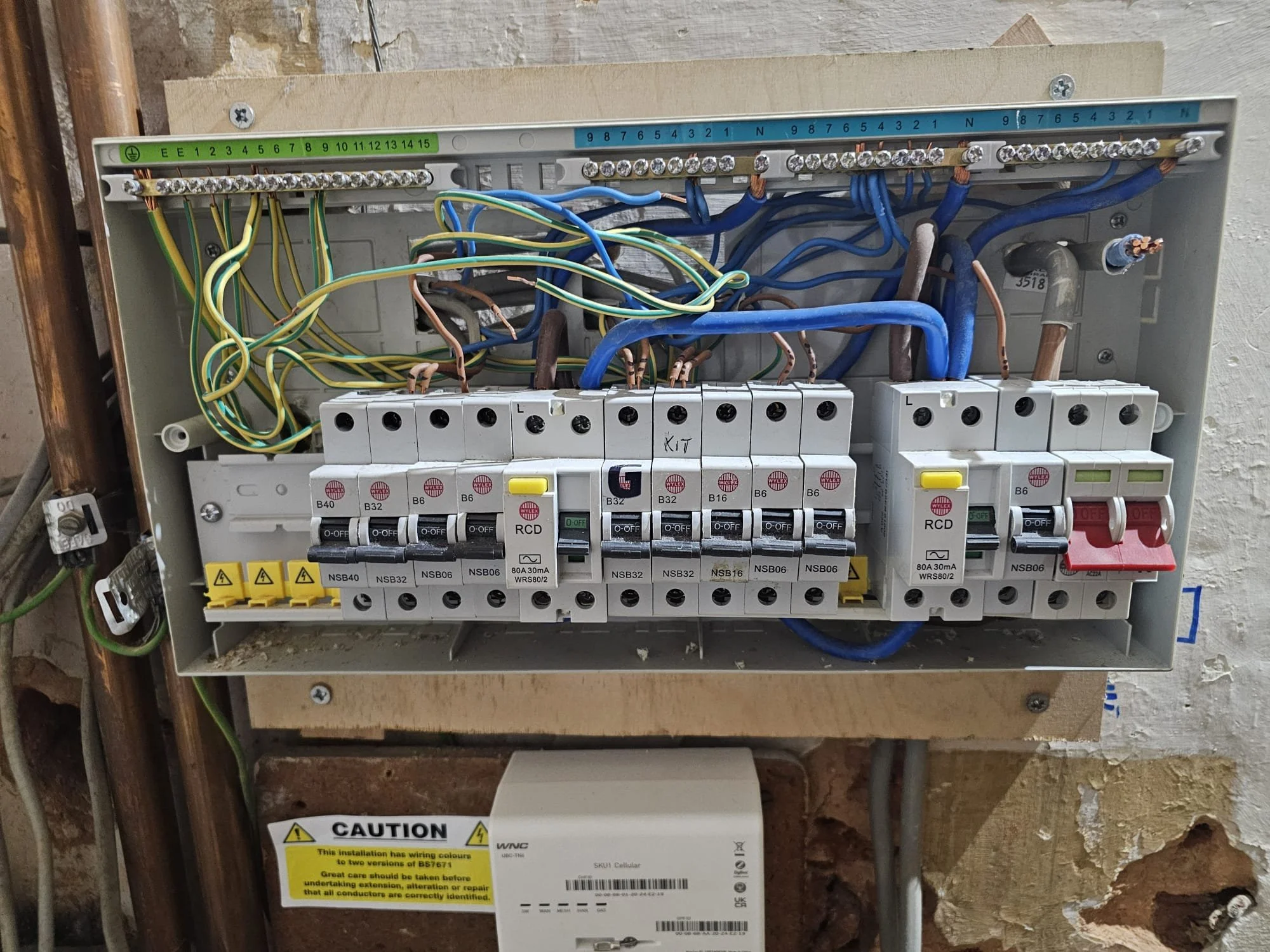
The 2014 rewire wasn’t a full rewire. The previous electrical company had left old wiring in place and connected it to the new installation. The board even carries the warning label for it: the installation has wiring colours to two versions of BS 7671, the old red and black alongside the newer brown and blue. Mixed colours aren’t a fault on their own, but here they were a sign of how much of the old installation had been kept.
A consumer unit with holes in it
The consumer unit fitted in 2014 had open holes in the side and the back. A fuse board should be fully enclosed. Openings like that let fingers or tools reach live parts, and they stop the enclosure doing its job of containing a fault.
Easy for children to reach
The board was mounted somewhere that was easily accessible to children. Combined with the openings in the casing, that’s a real risk, not a box-ticking issue.
What we did
The owner decided to put it right for the new owners rather than pass the problem on. We:
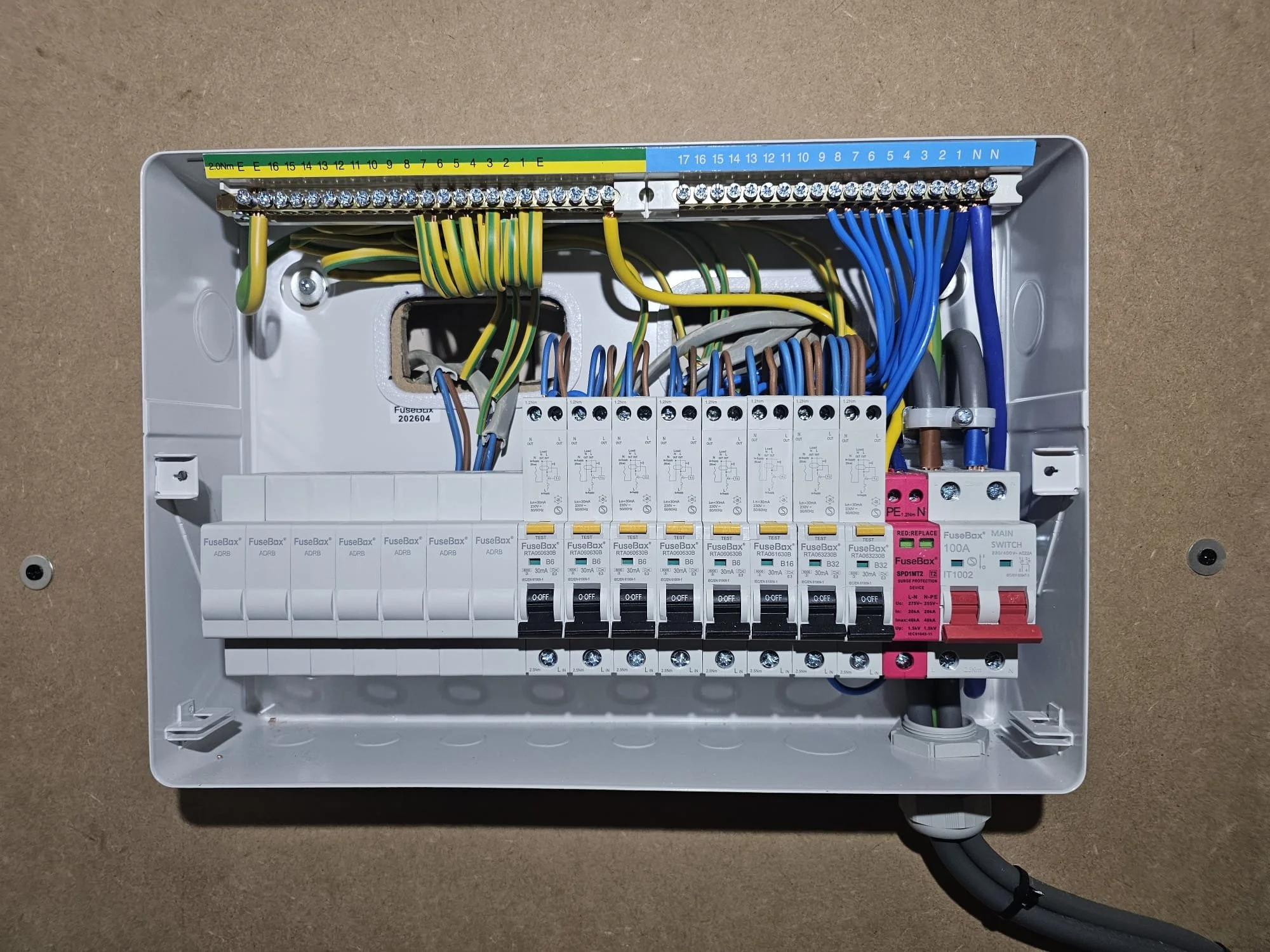
Replaced the consumer unit with a new board with RCBO protection on every circuit, so a fault on one circuit only switches off that circuit, not half the house
Added surge protection to protect the wiring and anything plugged in from voltage spikes
Brought the cables into the board through a sealed entry, neatly dressed and fully enclosed
Tidied and made safe exposed cables around the property
Fitted a new IP-rated fitting in the toilet, suitable for the damp conditions
Fitted new pendant lights
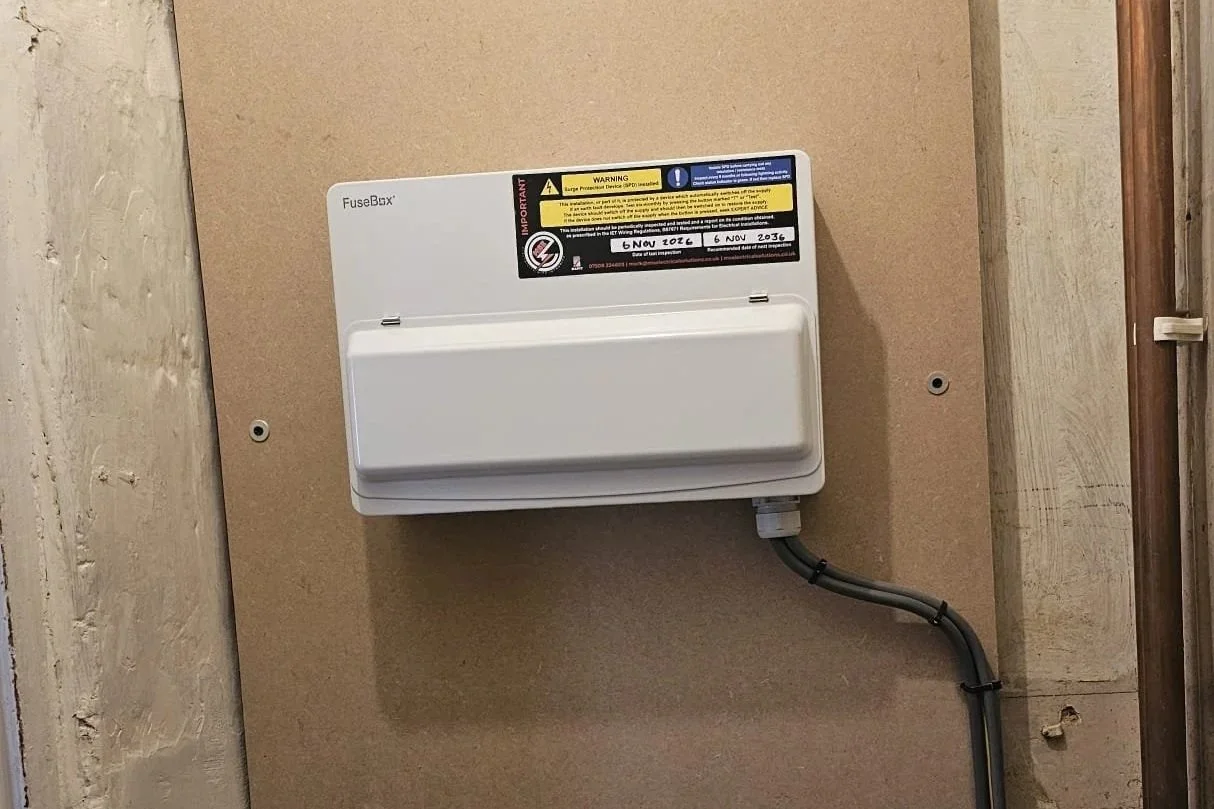
The new board was certified and labelled, with the next inspection recommended in 2036.
Why this matters if you’re selling
You don’t legally have to have an EICR to sell your own home in England, but buyers, surveyors and solicitors increasingly ask for one. A report that turns up problems late in a sale can lead to a renegotiated price or a delay. Getting it done early, and fixing anything found, gives the buyer a clean certificate and takes one more question off the table.
If your home was “rewired” a few years ago and you’ve never had it checked, it’s worth an EICR. A rewire is only as good as the electrician who did it.
Consumer unit upgrades start from £600 + VAT. EICRs start from £160 + VAT.
Frequently Asked Questions
Do I need an EICR to sell my house?
It isn’t a legal requirement when selling your own home in England, but buyers, surveyors and solicitors often ask for one. Having a recent EICR, and fixing anything it finds, can help avoid delays or price renegotiation late in the sale.
What does “wiring colours to two versions of BS 7671” mean?
UK wiring colours changed in 2004, from red and black to brown and blue. If an installation has both, it must carry a warning label so the next electrician identifies every conductor correctly. Mixed colours are not a fault on their own, but they show that older wiring is still in use.
Why is a consumer unit with holes in it dangerous?
A consumer unit should be fully enclosed. Openings in the side or back can let fingers or tools reach live parts, and stop the enclosure containing a fault. Any open holes should be closed off properly, or the unit replaced.
What is the difference between RCBOs and a board with two RCDs?
On a board with two shared RCDs, a fault on one circuit can switch off every circuit on that RCD, often half the house. With an RCBO on each circuit, only the circuit with the fault switches off and everything else stays on.
What is surge protection on a consumer unit?
A surge protection device protects your wiring and anything plugged in from short voltage spikes, such as those caused by nearby lightning or faults on the network. It is now expected on most new consumer units under the current wiring regulations.
How often should my home’s electrics be inspected?
For an owner-occupied home, every 10 years or when the property changes hands. Rental properties need an EICR at least every 5 years.
