
By Mark Summerton, NAPIT-registered electrician · Updated 26 October 2026
Quick answer: use lights marked for outdoor use (IP44 or higher), plug them into a socket with RCD protection, and keep the plug and any transformer dry. Never run an extension lead through a window or door. Use a timer, and switch them off overnight.
Every December I get the same calls. The electrics trip every time it rains. A lead has been crushed in the back door for a month. A set of indoor lights has been on the hedge since 2019. None of it is complicated to fix. Here's what I'd check before you plug anything in.
Indoor vs Outdoor Lights: Check the IP Rating
The IP rating tells you how well a product keeps out dust and water. You'll find it on the box or the transformer label.
| Rating | What it means | OK outside? |
|---|---|---|
| No rating, or IP20 | Indoor use only | No |
| IP44 | Protected from splashing water | Yes, in sheltered spots |
| IP65 | Protected from water jets | Yes, fully exposed |
| IP67 or IP68 | Can cope with brief submersion | Yes, including on the ground |
The lights might be outdoor-rated while the plug and transformer aren't. Most transformers need to stay indoors or inside a weatherproof box. Check the instructions.
The One Thing That Matters Most: RCD Protection
An RCD (residual current device) switches the power off in a fraction of a second if current leaks to earth, for example through water or through you. Anything plugged in outside must be protected by one.
Most modern consumer units have RCDs built in. Older fuse boxes often don't. Not sure? Look for a switch marked "RCD" or "Test" with a small T button. What every switch in your consumer unit does.
If you don't have RCD protection, a plug-in RCD adaptor is a good stopgap for this year. The proper fix is a consumer unit upgrade.
Why Extension Leads Through Windows Are a Problem
This is the most common thing I see, and the one I'd most like people to stop doing:
The cable gets crushed every time the door or window closes. Over a few weeks the insulation splits.
Rain runs along the cable and into the house, straight to the socket.
Indoor extension leads aren't built for outdoors. They have no protection from wet or cold.
It's a trip hazard in the dark.
If you have to use a lead this year, use an outdoor-rated one. Keep the connection off the ground and inside a weatherproof connector box.
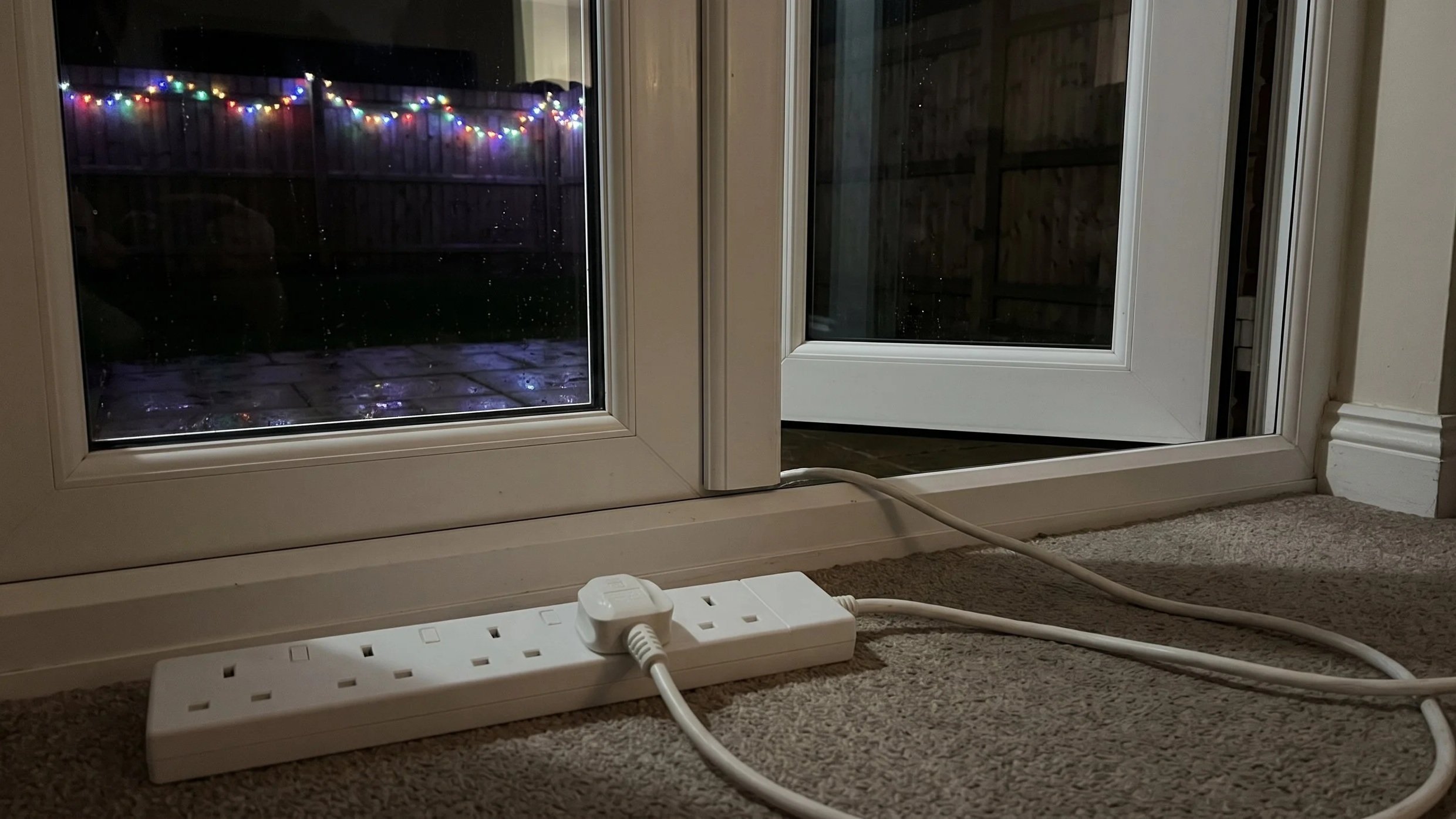
What not to do: a lead pinched in the back door. Every time it closes, the cable gets a little more damaged.
Don't Daisy-Chain or Overload
A single socket is good for 13 amps. That's plenty for LED lights, which use very little. The problem is plugging an extension into an extension into a multi-adaptor. Every joint is a weak point. One lead per socket, fully unwound if it's a drum, and nothing else plugged in alongside the lights.
Why Your Lights Trip the Electrics When It Rains
If the power goes off every time it rains, water is getting in somewhere. It's usually a connector lying on wet ground, a cracked plug or an indoor set used outside. The RCD trips because it's doing its job.
Unplug the outdoor lights and reset the switch. If it holds, the fault is in the lights or the lead. If it still trips, the fault is in the fixed wiring and needs fault finding. More on why switches keep tripping.
Before You Plug In: A 2-Minute Check
Tick each one off as you go. Takes about 2 minutes.
0 of 8 checked
Inside the House Too
The same rules apply indoors. Keep tree lights away from radiators, curtains and candles. If you have a real tree, keep the water away from the plug. Throw out old sets with filament bulbs that get hot. LED sets are cooler, cheaper to run and last longer.
When It's Worth Fitting an Outdoor Socket
If you put lights up every year, or use a pressure washer, mower or hedge trimmer, a proper outdoor socket pays for itself. You get:
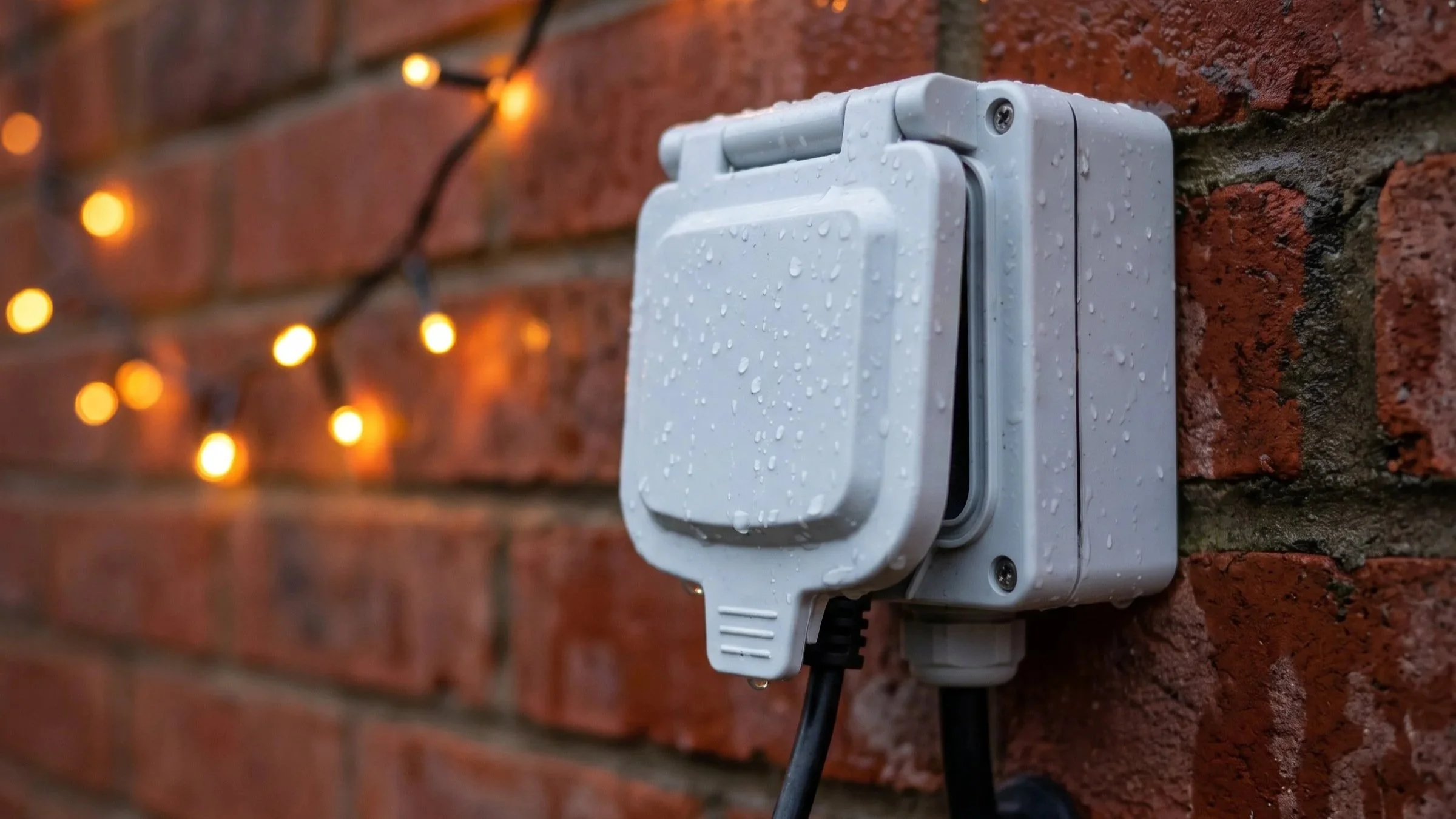
The lid closes over the plug, so the connection stays dry even in the rain.
A weatherproof, lockable socket where you actually need it
RCD protection built in
No more leads through doors and windows
A neater house front, with lights that can go on a timer from the socket
I fit outdoor sockets across Horley, Reigate, Redhill and Crawley. Often I do it on the same visit as PIR security lights (floodlight swaps from £125 + VAT). My diary is filling up for November and December, so book early if you want it in before the lights go up.
Call 07508 224603 or request a quote.
Christmas Lights: Frequently Asked Questions
Can I use indoor Christmas lights outside?
No. Indoor lights have no protection from rain or damp, and water getting in can trip your electrics or cause a shock. Only use lights marked IP44 or higher outside.
Is it safe to leave Christmas lights on overnight?
It's best not to. Use a timer to switch them off at bedtime, and always switch them off when you go out.
Why do my outdoor lights keep tripping the electrics?
Water is getting into the lights, a connector or the lead, and the RCD is switching off to protect you. Check for connections on wet ground and any indoor-rated parts.
Do I need an electrician to fit an outdoor socket?
Yes. It must be RCD protected and use outdoor-rated cable and fittings. If it needs a new circuit, it's notifiable under Building Regulations. A registered electrician will certify it for you.
